
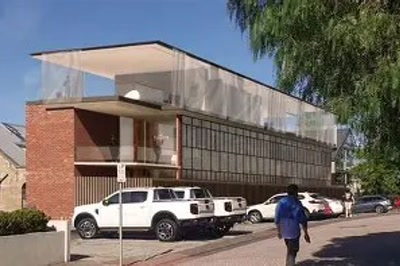
13-17 Castray Esplanade
Remedial & new apartment build
Staged refurbishment across offices, apartments and hospitality.

Concrete cancer, waterproofing, facades and underpinning. We diagnose the cause before we price the cure.
Piper Moss brings together Stephen's 40 years of building, with estimating and risk-control expertise gained through major NSW infrastructure projects.
We take on the structural and remedial work most builders would rather not quote, and we finish it properly. The person who inspects your building is the person who prices the work and stands behind it once it is built.
Strata, apartment and commercial remedial, and the structural work that needs a builder who will commit to a cause before a price.
Spalling concrete, exposed and corroding reinforcement, and the remediation that stops it returning.
Failed membranes, planter boxes, wet areas and the balcony leaks that show up as damp below.
Facade repair, balustrade and balcony rectification on buildings that stay occupied throughout.
Underpinning, crack stitching and restumping where footings or ground conditions have moved.
Rotten framing, sagging floors and failed structural members, put right rather than patched.
Scopes a strata committee or insurer will accept, priced line by line and staged around residents.
Concrete cancer is usually the symptom rather than the disease. Water reaches the reinforcement, the steel corrodes and expands, and the concrete spalls off the face.
Patch the spall without finding the path the water took and you buy a year or two, then the same repair fails beside the last one.
A failed membrane, a planter box with nowhere to drain, or a balcony that falls back toward the building will keep feeding it. So we open up enough to establish where the water is actually getting in, put that in writing, and price the rectification against it.
Where an engineer is engaged we build to their specification. Where none exists, we can prepare one.
The same patch of damage can have several different causes, and the cause decides the repair. These are the tells we look for first.
Not sure which one you are looking at? That is what the inspection is for. We put the cause in writing before anyone talks about price.
If it is a balcony, start with why a balcony cannot be half fixed. It sets out what a repair has to include once the tiles come off, and why patching one corner is usually the first of several campaigns rather than a fix.
We attend site, establish what is actually wrong and put the scope in writing before anyone talks about price.
Priced line by line with the assumptions stated. Provisional items are named and capped, never buried in the total.
Supervised on site, reported weekly, and handed over with documentation, warranties and a defects period we answer.
Four free tools built from the way we actually estimate remedial work. No sign up, and every one of them shows you the answer before it asks for anything.
Tick what you can see and get the scope a proper repair has to include, plus an indicative direct cost per balcony.
Access is usually the largest single cost on a facade job. Area and weeks in, erect, standing hire and dismantle out.
Completion date in, and the 6, 2 and 10 year NSW dates out, so you know whether somebody else is still on the hook.
Splits a project total across unit entitlements and instalments, so an owner sees their number rather than the building's.
The five we get asked on nearly every remedial job.
Water reaching the reinforcement. The steel corrodes, and because rust occupies more volume than the steel it came from, it expands and pushes the concrete off the face. Concrete cancer is the symptom. The cause is the path the water took, which is usually a failed membrane, a planter box with nowhere to drain, or a balcony falling back toward the building.
Only where the rest have been verified as sound. Waterproofing is a continuous system, so reaching the membrane means removing the tiles and screed and resetting the falls across the whole slab, and new membrane cannot be reliably lapped into old membrane whose condition cannot be verified. Access is also charged to erect, to stand per week and to dismantle, so a second campaign later pays for all of that twice. There is more on this in the balcony scope tool.
Usually not. Most strata remedial work is staged around residents who stay in place. Balcony access is lost for the duration on the stack being worked on, and scaffold affects outlook and privacy, so the programme is sequenced and notified in advance rather than run across the whole building at once.
It depends on the dates and on your documents. Under the Home Building Act 1989 (NSW) the statutory warranty period is six years for a defect in a major element and two years for other defects, running from completion. Waterproofing is a major element, which is why balcony leaks often fall inside the six year period. Whether a claim is actually available to you is a legal question, so establish the dates first with the warranty period checker and take advice before an owners corporation funds the work itself.
Yes. Where a structural engineer or remedial designer is engaged we build to their specification and their inspection regime. Where no specification exists, we can prepare one. Structural concrete repair and anything affecting the slab should be designed rather than priced off a photograph.
Remedial and staged work on occupied buildings.
Staged refurbishment across offices, apartments and hospitality.

Commercial refurbishment and fit out.
[email protected]
0478 183 300
Mon to Fri 7am to 6pm, Sat 8am to 2pm